What's New On Tom's Travel Blog?

Links to Linda's Photo Pages Have Been Added!
See The List On The Left


Almost all photos on this blog come from our Flickr Page. You can go directly to our Flickr photo sets by following this link. It's the easiest way to navigate our on-line photos.


Sunday, August 27, 2023

A Week in Canada - Minneapolis to International Falls

Linda and I have long discussed a trip to Winnipeg, Canada. While it is only a day's drive from the Twin Cities, neither of us had ever been there. Asking around among friends, we discovered that very few had ever visited this northern plains metropolis either. 

Now that we have finished photographing all fifty of the U.S. Capitols, Linda suggested that we begin visiting the provincial capitol buildings (legislative buildings) of our northern neighbor, Canada. We decided to start with Winnipeg. 

 It's about a six-hundred mile trip from our home to Winnipeg, but of course, we would be stopping at sites along the way. I wanted to make sure we passed through International Falls, perhaps visit the famed Voyageur's National Park and maybe see a few other sites. We didn't expect to make it out of Minnesota on the first day. 


 We got off to a fairly early start, expecting to stop for breakfast/lunch at Tobies' restaurant in Hinckley, the traditional "halfway point" between the Twin Cities and Duluth.  We were disappointed to find that the dining room at Tobies doesn't open until late afternoon on Tuesdays.  We explored a few options nearby before settling in for a lunch at Buffalo Tracks bar and grill at the Askov exit from I-35.  The food was good and there are numerous bird feeders just outside the dining room windows to provide lunch entertainment.

Our next stop was the Thompson Hill Information Center high above Duluth, where we expected to pick up a few pointers for touring between Duluth and International Falls.  The sky was very hazy (perhaps smoke from Canadian fires?) so the usual stunning view of the harbor from the hill was poor.  There was no staff on hand, and brochures were in very short supply.  So far we were not doing well!

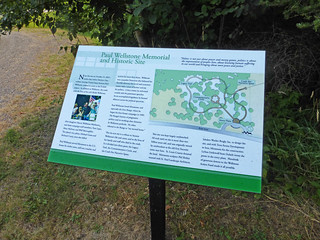
We passed through Duluth and turned onto U.S. 53 heading northwest past the Miller Hill Mall for the famed Minnesota Iron Range.  After about an hour, as we neared Eveleth and Virginia, I saw a sign pointing out the Paul Wellstone Memorial and Historic Site.  We swung around and headed east for two miles to visit the site.


In late October of 2002, a chartered plane carrying Senator Paul Wellstone, his wife, a daughter and several others crashed here due to the pilot's failure to maintain adequate airspeed during landing maneuvers at the Eveleth airport.   NTSB report with details here;   $25million settlement here;   epilogue and conspiracy theories here.
 OrrToRainyLake-01    OrrToRainyLake-02


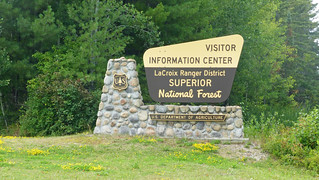
Another hour's drive up U.S. 53 brought us to the La Croix Ranger District visitor information center not far south of the town of Orr. We pulled in for information just five minutes before closing time.  A very nice ranger on duty took time to tell us about several points of interest in the area.  She recommended a "Bog Walk" not too far ahead, right on the highway and also a visit to Vermilion Falls about twenty miles to the northeast. We've always found it worth a visit to information centers. You can do hours of pre-trip internet research and still miss some interesting spots.

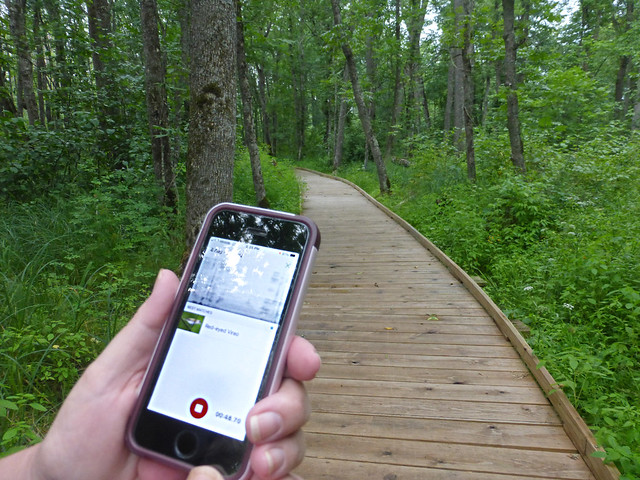
 We stopped at the Bog Walk to explore it.
OrrToRainyLake-05    OrrToRainyLake-06

OrrToRainyLake-08


Linda started up her Merlin bird-call identification app, but all we found was a red-eyed vireo.
OrrToRainyLake-07


OrrToRainyLake-13


OrrToRainyLake-14


OrrToRainyLake-15


By the time we completed the loop through the bog, a pretty good storm had come up which we watched sweep across nearby Pelican Lake, whipping up whitecaps on the water.
OrrToRainyLake-19


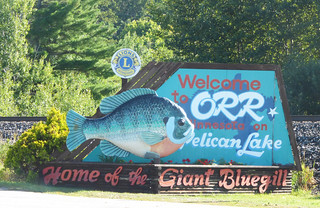
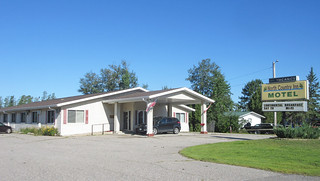
 We pulled into a small motel in Orr (population 300), noting the prominent Bluegill sign nearby.
OrrToRainyLake-20    OrrToRainyLake-27


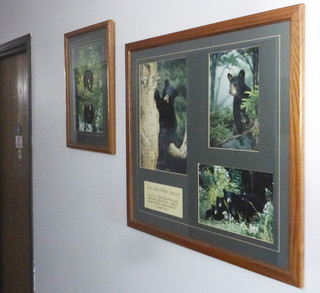
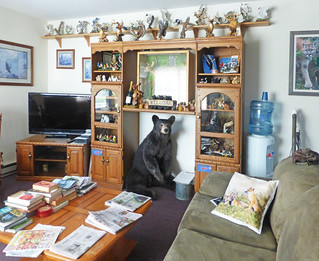
Power had been knocked out in the area by the storm and the couple running the motel was not optimistic about it returning any time soon. After paying for a room we headed out a few miles east to Lake Vermilion for dinner.  After dinner, we returned to the motel and noted the "black bear" theme in the lobby and hall.
OrrToRainyLake-21    OrrToRainyLake-25

We discovered that there is a nearby black bear observation area but we had missed our opportunity to visit it that evening - looks like an interesting stop, however.


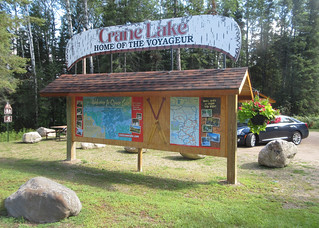
In the morning we headed out toward Vermilion Falls via the town of Buyck and Crane Lake. 


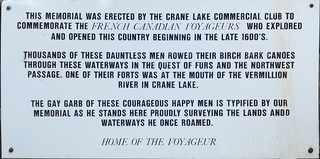
 At Crane lake, we encountered our first Voyageur!

OrrToRainyLake-31


OrrToRainyLake-28    OrrToRainyLake-30


Crane Lake has a number of resorts and trails for outdoor enthusiasts.

OrrToRainyLake-32


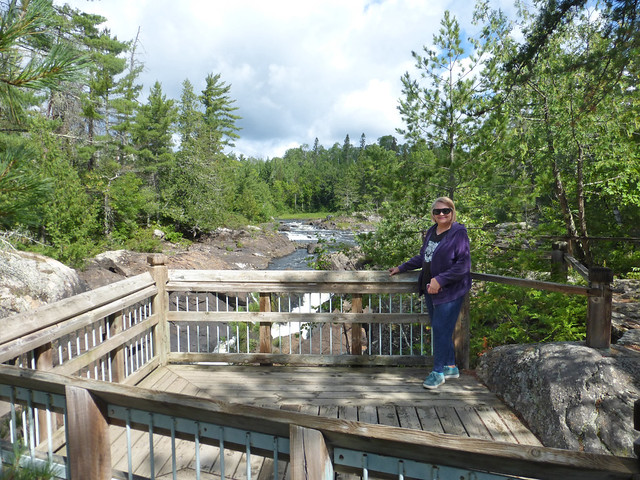
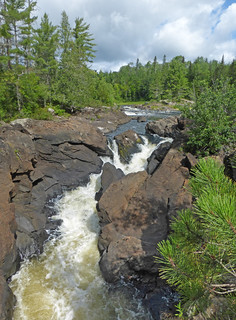
Vermilion Falls is not a huge waterfall, but it does have a nice viewing platform that puts a visitor right above it.
VermilionFalls-2


VermilionFalls-3    OrrToRainyLake-34


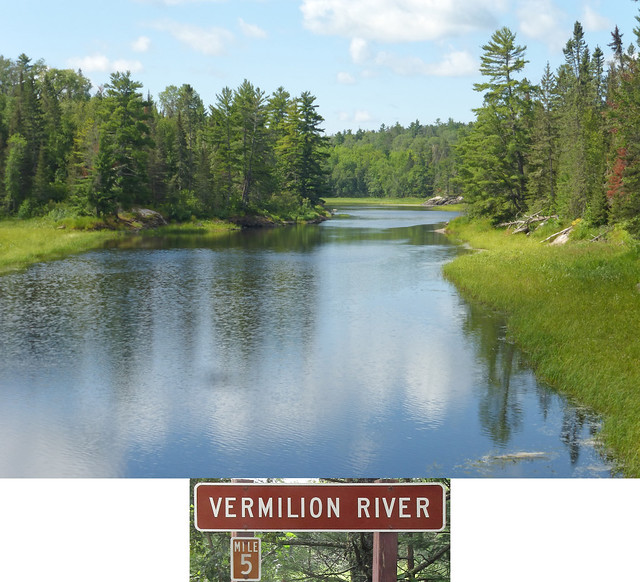
Crossing the Vermilion River provides a great view of a typical northern Minnesota scene - we just wished there was a moose nearby that would wade out into the water to make a perfect picture.
OrrToRainyLake-36


Back on U.S. 53, we were soon approaching Voyageur's National Park, unique as Minnesota's only true National Park and the nation's only water-based National Park.


We stopped briefly at the southern, Kabetogama gateway to the park to take a picture of the large Walleye guarding the entrance.  Note the saddle, in case you are inclined to riding!

OrrToRainyLake-37


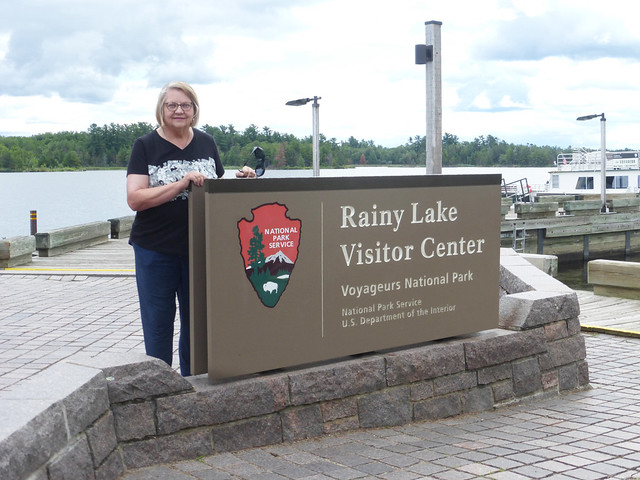
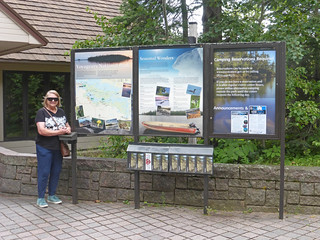
The main entrance to Voyageur's and the Visitor Center is a few mile east of International Falls on Rainy Lake, home to the many houseboats which provide the best access to Voyageur's waters.

OrrToRainyLake-45    VoyPark-1

OrrToRainyLake-48


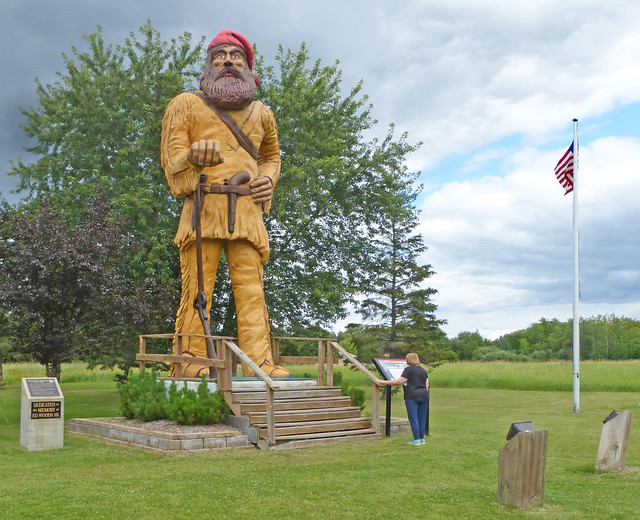
Here, we met a second Voyageur, Big Vic, on the outskirts of the lake in the town of Rainier.
OrrToRainyLake-49 


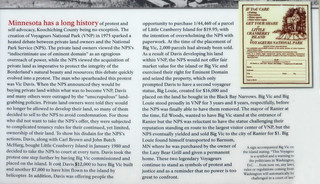
Big Vic is a symbol of the years of struggle between local land owners and the Federal Government as the National Park Service acquired the property to form Voyageur's National Park.

OrrToRainyLake-50    OrrToRainyLake-51


 After greeting Big Vic, we journeyed back through the town of Rainier to International Falls where we spent our second night.

.


Tuesday, July 18, 2023

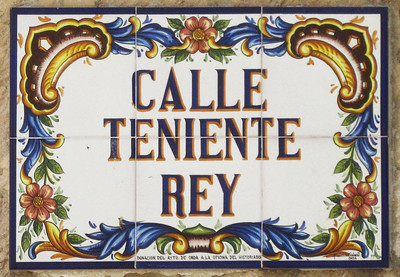
A Week in Cuba - A Stroll Down Calle Teniente Rey

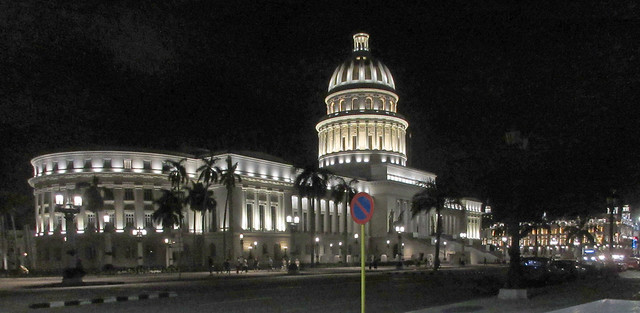
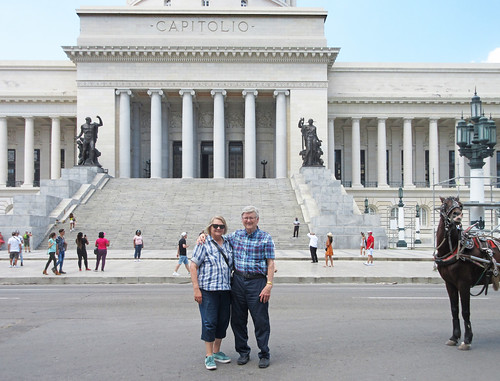
Teniente Rey is a street in Old Havana that extends from the steps of the Cuban capitol building about three-quarters of a mile eastward toward the waterfront.  (The street is also marked with signs as Calle Brasil for a few blocks near the capitol building.)
CubaTenienteRey-03

 CubaTenienteRey-02


The capitol building will be a stopping point for most tours of the old city.  It makes for an attractive photo from many angles, day and night.

CubaTenienteRey-04

CubaTenienteRey-17


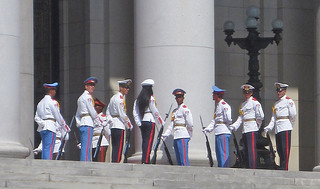
Since Old Havana is a compact area, we passed the building several times during our stay.  One morning, we saw what appeared to be a diplomatic arrival at the building with a ceremonial honor guard on duty to greet the visitor.

CubaTenienteRey-05    CubaTenienteRey-08


On our first visit to the area, we joined the tourists using the building for a background in this photo.

CubaTenienteRey-11


Walking away from the capitol toward the waterfront, we encountered an eclectic mix of bars and restaurants as we passed Plaza del Cristo and the edge of Plaza Vieja (our favorite of the area's restored squares) before arriving at the church buildings that line the approach to Plaza de San Francisco de Asis.


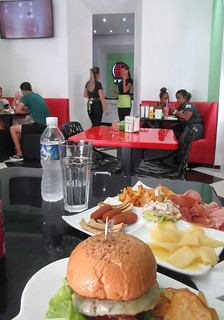
D'Next, a diner style restaurant, has excellent hamburgers and some interesting appetizer plates. It is reported to have great breakfasts as well as lunch.

CubaTenienteRey-23

CubaTenienteRey-21    CubaTenienteRey-20


Teniente Rey 360 served up an excellent dinner for two including deserts for about $25.

CubaTenienteRey-29


We had numerous good meals at the restaurants on this street over the course of our stay.  We had lunch at Saoco twice and an excellent dinner at Restaurant Bulgaria. It serves Cuban food, despite the name.

CubaTenienteRey-31    CubaTenienteRey-32


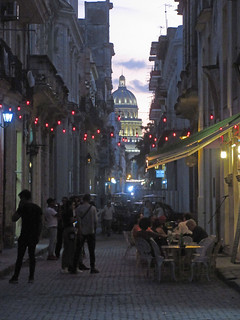
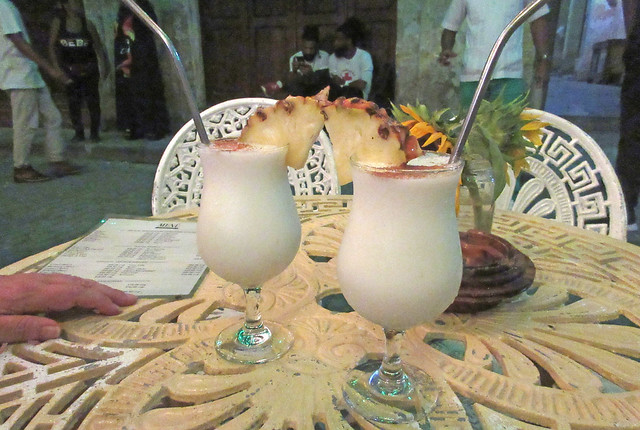
Day or night, our meals were accompanied by live and lively music.  Stopping for a drink along the avenue presented the opportunity to glance back at the capitol dome as the sun set.  At times, the blend of competing bands outside was a bit harsh, as each seemed to represent a distinct style.

 CubaTenienteRey-38    CubaTenienteRey-37

CubaTenienteRey-35


This is one of the most popular tourist streets in Old Havana and has restricted vehicle traffic in areas.

CubaTenienteRey-30


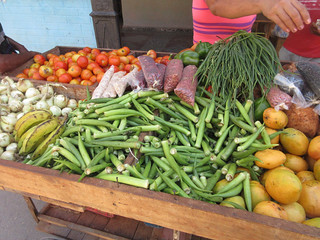
Local residents shop for fresh vegetables from vendors who set up carts along the avenue.

CubaTenienteRey-26    CubaTenienteRey-28


Just before reaching  Plaza Vieja, there is even a gelato store serving a variety of traditional as well as tropical flavored ice creams.

CubaTenienteRey-39


Near the foot of  Teniente Rey, we encountered an entrance to Zanja Real, the Havana Aqueduct constructed between 1565 and 1592 with a story of its importance to the development of agriculture and manufacturing in Cuba.  (* see translation at the end of this page)

CubaTenienteRey-43    CubaTenienteRey-45


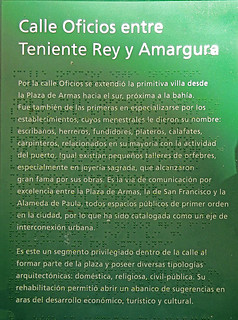
Calle Teniente Rey comes to an end at Calle Oficios, once a busy home to notaries, blacksmiths, foundries, silversmiths, caulkers and carpenters, mostly related to port activity. (** see translation at the end of this page)

CubaTenienteRey-48    CubaTenienteRey-47


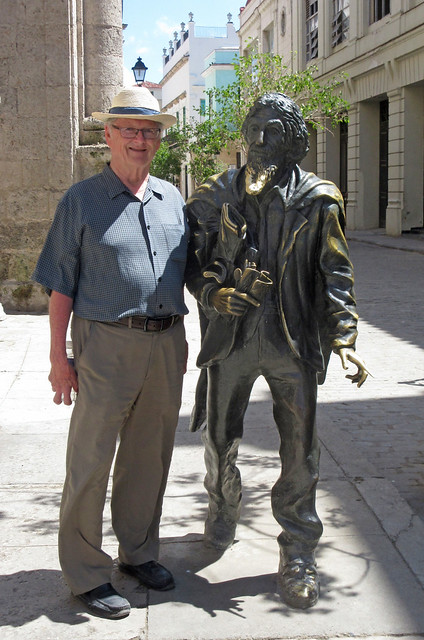
Turning onto Calle Oficios, we quickly came into the heart of Plaza de San Francisco, but not before passing this curious bronze statue of "The Gentleman from Paris." 

CubaTenienteRey-49


This homeless gentleman was a much beloved figure in Havana in the mid twentieth century.  Restoration of the square in 2001 included the erection of a statue to his memory; parts of the statue have been polished to a shine as visitors stroke his beard and index finger for good luck. (*** See full explanation below.)


TRANSLATION OF SIGNS:

These are presented via Google Translate and may not be quite perfect!

* Zanja Real:

Zanja Real

Built between the years 1565 to 1592


The Havana aqueduct, known as Zanja Real, was the first to be built in Cuba, promoted in 1545 by Juan de Rojas, the richest neighbor of the town, and the patronage of Governor Juanes Dávila.

After various technical and economic mishaps, the works began in 1566, under the direction of the master master Francisco de Calona, but the unstable nature of the ground on which the Ditch was founded and the unpredictable hurricanes meant that the waters derived from the Almendares River did not reach the Plaza de San Francisco until 1591, and the Callejón de El Chorro in the following year.

The execution of the Ditch reveals a careful leveling study in its layout, since the waters were conducted by gravity through a path of about 11 km, being distributed upon reaching the city by a network of canals that distributed it to public fountains, and to other branches for the supply to religious institutions, the Crown and private properties. In the 17th and 18th centuries, due to public needs, new pipes were added that crossed different points of intramural Havana.

This aqueduct also provided other services such as irrigation ditches: driving force for the agricultural transformation industries, mainly in sugar mills and roller mills to make powdered tobacco. Its waters had an important application in the 18th century to move the great saw that cut the hard Cuban wood used in the construction of the ships of the Havana Arsenal.

In the 18th century and especially in the 19th century, the Zanja Real was insufficient to supply a cosmopolitan city enriched by the sugar trade. This forced the creation of two new aqueducts, that of Fernando VII. built between 1831 and 1835, and later the Canal de Venta, built between 1859 and 1897, finally named de Albear in honor of its designer and builder, the eminent engineer Francisco de Albear y Lara. This last work is considered a marvel of 19th century engineering and is still in use.


** Calle Oficios:

Calle Oficios


between Teniente Rey and bitterness


Along Calle Oficio the primitive town extended from the Plaza de Armas to the south, close to the bay. It was also one of the first to specialize in establishments, whose artisans gave it its name:  notaries, blacksmiths, foundries, silversmiths, caulkers, carpenters, mostly related to port activity.

There were also small goldsmith workshops, especially in sacred jewelry, who achieved great fame for their works. It is the main communication route between the Plaza de Armas, the Plaza de Sa Francisco and the Alamed de Paula, all first class public spaces in the city, which is why it has been classified as an axis of urban interconnection.

This is a privileged segment within the street as it forms part of the square and has diverse architectural styles: domestic, religious, civil-public. Its rehabilitation allowed opening a range of suggestions for the sake of economic, tourist and cultural development.


*** The Gentleman from Paris - From www.atlasobscura.com

El Caballero de Paris (The Gentleman from Paris)

Havana, Cuba

This statue in Plaza San Francisco commemorates a beloved figure from 1950s Havana. 

He roamed the streets of Havana in bizarre clothing but could quote classic Spanish literature. Today his bones rest in an unlikely place. El Caballero de Paris (the Gentleman from Paris) was a familiar sight in the mid-20th century of Havana.

He was a thin man with wavy blond hair and a long beard who dressed in elaborate costumes reminiscent of the elegant European upper classes; a black cloak over a black suit with a flower in the jacket’s lapel. Because of his appearance, Havana residents christened him the Gentleman from Paris. Although he slept in the streets of Havana and depended on the largess of kindhearted Havana residents for his daily meals, he could recite passages from classic Spanish literature unerringly and with dramatic flair. Jose Maria Lopez Lledín, A.K.A. el Caballero de Paris, was born in Lugo, a major city in Spain’s northwestern autonomous region of Galicia. The Spaniard was rumored to have emigrated to Cuba as a young boy of 14. He labored at odd jobs in restaurants and hotels doing work typically done by the Spanish immigrants that poured into Cuba at that time.

Years later he was unjustly convicted of a crime and sent to prison, an experience that caused him to retreat to a fantasy world from which he would never return. Once out of prison, he wandered the city giving little drawings to the occasional passersby. Over the years he became a beloved figure within Havana.

Although never violent, he became increasingly irrational until a compassionate doctor admitted him into Havana’s local psychiatric asylum. Eight years later he died there, still quoting classic Spanish poetry and literature.In 2001, the city of Havana began its restoration of the colonial sector of Old Havana. The city’s official historian had the Spaniard’s bones exhumed and buried with much fanfare in the church of San Francisco in the beautiful plaza of the same name. This was one of the Parisian Gentleman’s favorite places to roam.

But the citizens of Havana were still not ready to let the Parisian Gentleman go. This symbol of Havana lives on in a bronze statue of him placed at the door of San Francisco church in Old Havana. Parts of the statue have been polished to a shine as visitors stroke his beard and index finger for good luck.

Monday, July 10, 2023

A Week in Cuba - A Day At The Beach

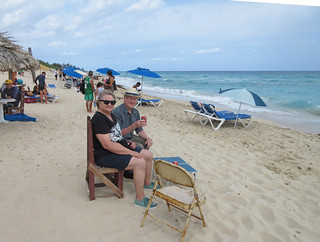
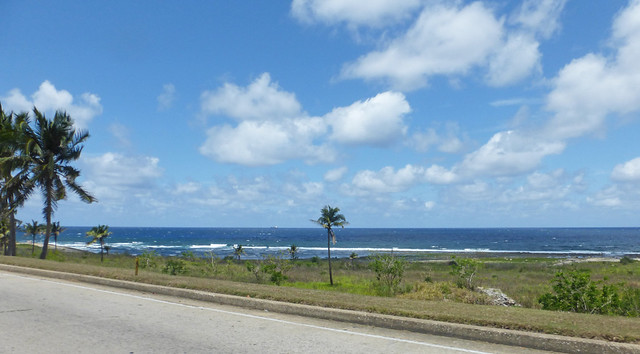
Inspired by the view of Caribbean sandy beach we saw on our way to Marina Hemingway, we decided to enjoy a day at the beach and had our guide, and now good friend, Abel, put that on the agenda for the next day.

 CubaBeachDay-01


Yes, Abel could make that happen, but the question was, would Billy have enough gasoline to take us in the 1950 Chevy or would an alternative have to be found?

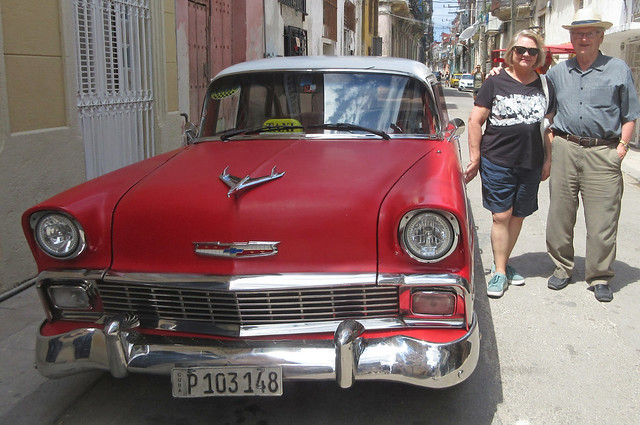
At 10:00 a.m., Abel showed up with our new driver, Luis, in his 1956 Chevy!  Billy was no-doubt in a gasoline station line somewhere.  We were delighted with the '56 since Linda's father had owned a similar one and she even crossed the country a time or two in it long before we ever met.

CubaBeachDay-02


We headed to the east, heading out past the now familiar Morro Castle and the large monument to Luis Gomez. 

CubaBeachDay-07

CubaBeachDay-08


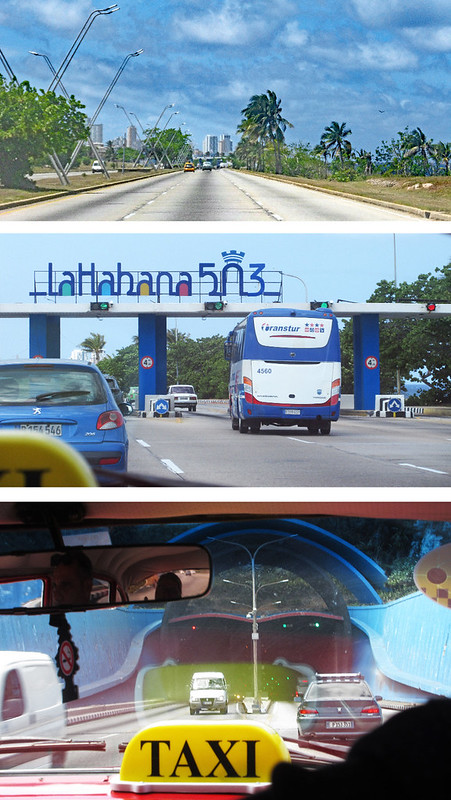
After passing through the tunnel under the bay we went past Cojimar and Alamar by a few miles until we reached Santa Maria del Mar.  There are some nice homes in the area and easy beach access.

CubaBeachDay-09    CubaBeachDay-05


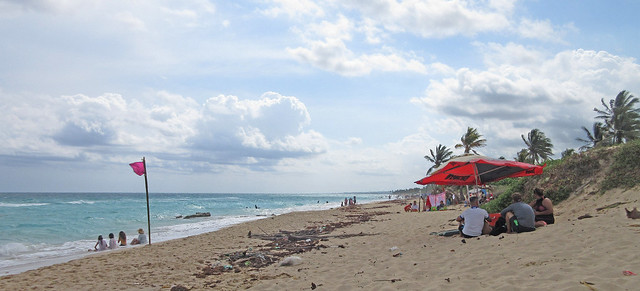
The red caution flag was flying on the beach and a stiff breeze blowing but this didn't seem to inhibit any of the local beach visitors.

CubaBeachDay-10


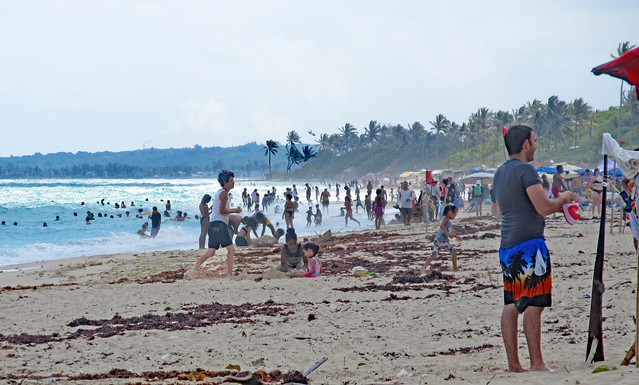
Children and adults were swimming and playing.  Smaller groups were in our immediate area but large numbers could be seen in the distance.

CubaBeachDay-14


CubaBeachDay-22


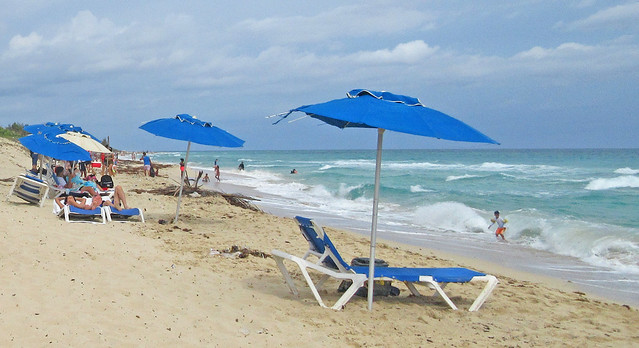
We enjoyed the sun and sand in the area for a couple of hours as beach vendors passed by with food, drinks, chairs, hats and the like.

CubaBeachDay-17    CubaBeachDay-20


After taking a couple more pictures of Luis' Chevy, we headed back into town, passing the local Soccer stadium.

CubaBeachDay-26    CubaBeachDay-28


It is a pleasant drive along the coastline and approaching the tunnel under the bay from the east, there is a large sign reminding everyone that this is the 503rd year since the founding of Havana.

CubaBeachDay-29

CubaBeachDay-30